
Practice Project: Butterfly
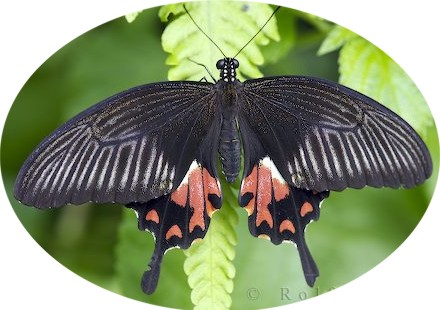
Well, the summer is over and I am SO looking forward to spending time in the studio, processing all my amazing experiences of the summer! I am particularly excited about getting started on my Armless Maiden panels. As an exercise to prepare myself, I decided to make a series of small pieces, that will probably end up being necklaces or brooches, just to get myself in practice. Cloisonne is not a technique that I am particularly familiar with, so I decided to take some images from nature, and see how closely I could re-produce them. It has been a really interesting experience! I am a strong believer in sometimes concentrating entirely on technique – and that’s what I have done with these pieces. There are 5 pieces in the series. I will post the process pictures of them all – below is the first one – a butterfly, including the photo I was working from.
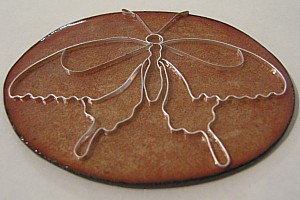
The wires, sunk only slightly into a layer of clear flux (the piece is already enamelled on the back)

First coat of colour (the colours, which are ground up glass) are laid in wet with a tiny spoon or a brush)
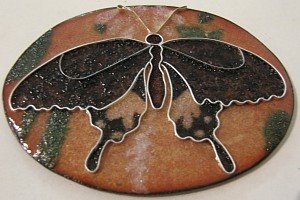
First coat fired – the goal is what is called a ‘sugar fire’ which means that the enamel grains are barely fused.

Second coat of enamel
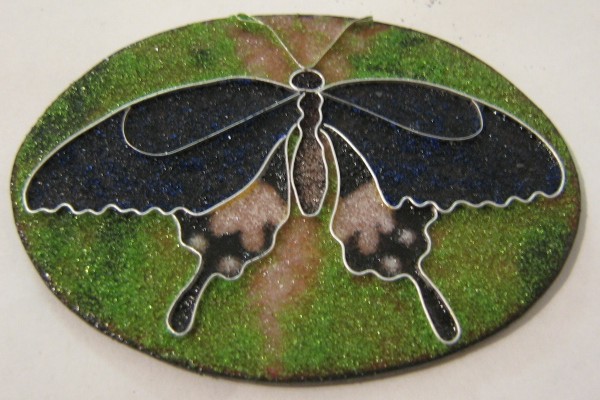
Second coat sugar fired

re-fired to get a smoother surface for adding foils
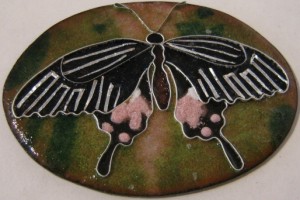
Cutting the foils (which are very thin fine silver) was really time consuming. The foil is sandwiched between two pieces of paper for easier working – but when I cut the small strips, the metal torqued, and each piece has to be separately flattened before it could be added to the piece – this took over an hour! (3rd coat)

Fourth coat
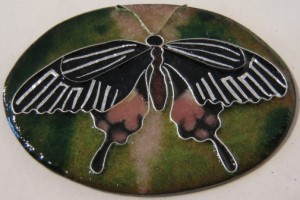
Fourth coat sugar fired

Fifth coat
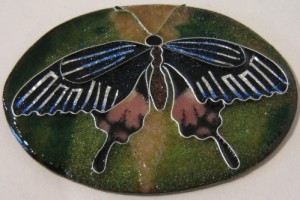
Fifth coat sugar fired
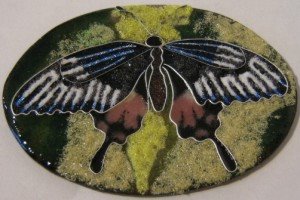
Sixth coat

Sixth coat sugar fired

Seventh coat (sorry – I forgot to take the picture of this firing!)

The whole surface was then sanded, and then this final coat added

Final firing.
 imago corvi